Research
Some of my current research projects …
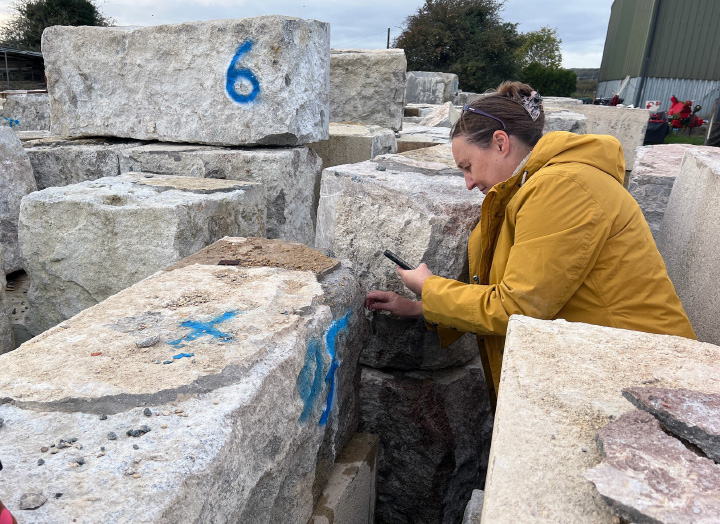
Granites of the Thames Embankment
Photo by Oliver Wilton
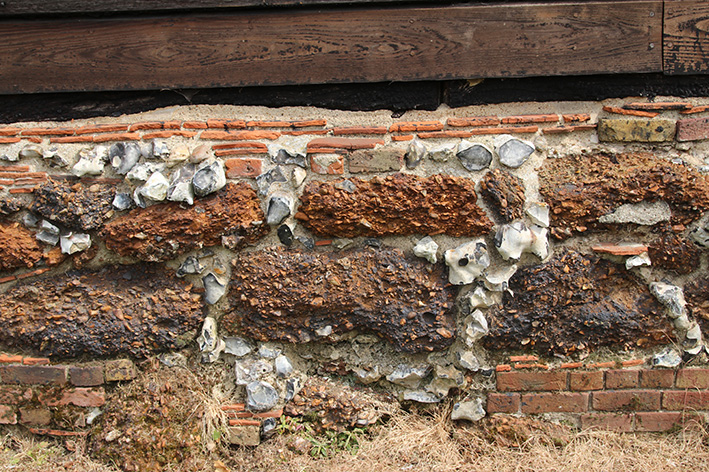
London Ferricrete and the Geology of Harmondsworth Great Barn
Paper presented at the conference ‘Harmondsworth600 | Celebrating six centuries of the Great Barn at Harmondsworth’, 5th September 2026
Abstract: Harmondsworth Great Barn has been designated a Site of Geological Interest (SGI) by the London Geodiversity Partnership, reflecting its importance in the geological history of the capital. The Barn’s foundations are constructed of ferricrete, an iron oxide-cemented duricrust, and a now forgotten building stone in the London area. Ferricretes form in cemented Pleistocene-Holocene river gravels and related sediments and were collected where they occurred in London, SE England and further afield as vernacular building materials. Although there are a number of churches in NW and N London which use ferricrete in their construction, Harmondsworth Great Barn is unique in that it is the only surviving secular building incorporating from ferricrete in the London area. The village of Harmondsworth (London Borough of Hillingdon) lies on a flat terrace of the Pleistocene-age, cold climate Taplow Gravel Member and this area has been an active location for gravel extraction during the 20th Century. Evidence of Medieval extraction of ferricrete duricrusts can be found in the fabric of Harmondsworth Great Barn wherein unusually large blocks of iron cemented gravels can be observed. This paper will explore the provenance, practicalities and use of ferricrete as a Mediaeval building material in London and specifically its place in the construction of Harmondsworth Great Barn.
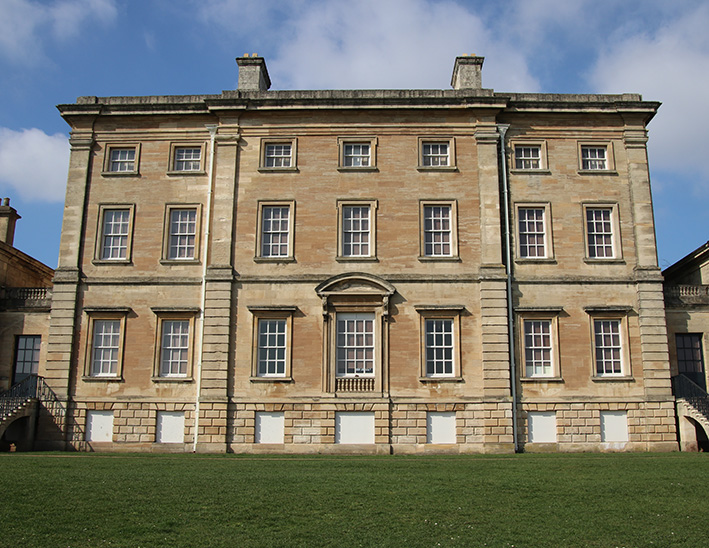
Sourcing and supplying stone to a provincial English House: Cusworth Hall, Yorkshire
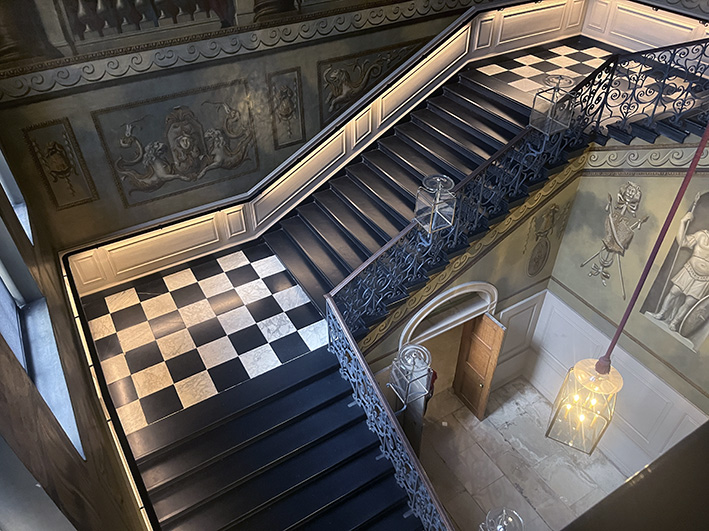
Some examples of marble work in the age of Wren: a Kensington Palace case study.
Andrew Tierney & Ruth Siddall
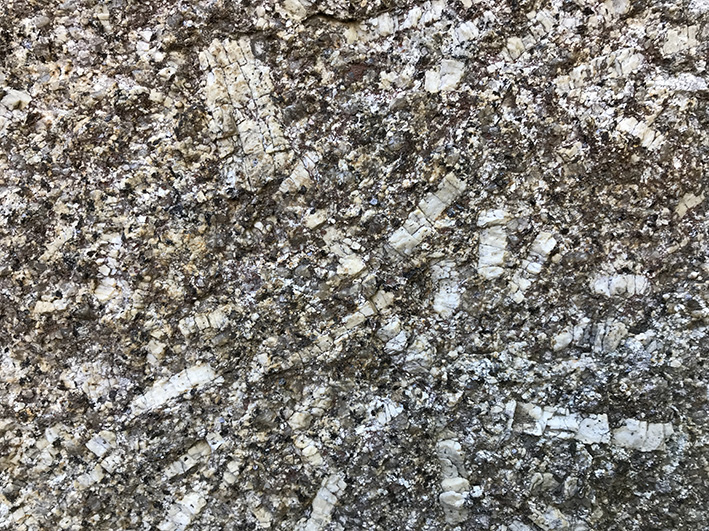
The Granites of the Cornubian Batholith and their potential as Global Heritage Stones
Abstract: The Cornubian granites of SW England were intruded during the terminal phases of the Variscan orogeny in the late Carboniferous and early Permian. They are peraluminous, two-mica and muscovite granites, available in large block size which are suitable as dimension stone used in all manner of building and engineering contexts. Their aesthetic qualities and ability to take a polish has also made them popular as monumental and decorative stones. Additionally, they have found small-scale but widespread utilitarian application as gravestones, water troughs and garden rollers. The Cornubian granites have a history of use in construction going back over 5,000 years, from megalithic monuments to the reconstruction of the Thames Embankment in 2023. These exceptional building and engineering stones are important materials in the archaeological and heritage architecture of the British Isles and beyond. With a history of use meeting all the required criteria, this paper makes the case for the designation of the Cornubian granites as Global Heritage Stones.
Forthcoming Publications
Hayes, M., Lüttmann, N., Siddall, R. & Wyse Jackson, P. (Eds.), Enabling Architecture: Sourcing, Selecting and Supplying Stone, UCL Press. To be published on 1 May 2027.
Publications
Books, Book Chapters & Guides
Eastaugh, N., Walsh, V., Chaplin, T. & Siddall, R., 2004, The Pigment Compendium: A Dictionary of Historical Pigments., Elsevier – Butterworth Heinemen., 499 pp.
Eastaugh, N., Walsh, V., Chaplin, T. & Siddall, R., 2004, The Pigment Compendium: Optical Microscopy of Historical Pigments. Elsevier – Butterworth Heinemen., 416 pp.
Eastaugh, N., Walsh, V., Chaplin, T. & Siddall, R., 2008, Pigment Compendium: A Dictionary and Optical Microscopy of Historic Pigments. (1st ed.). London: Butterworth-Heinemann., 958 pp.
Siddall, R., 2002, The composition of the Earth: Rocks and Minerals. In: B. De Vivo, B. Grasemann, & K. Stüwe (Eds.), Geology Volume 1., Encyclopedia of Life Support Systems (EOLSS) https://www.eolss.net/Sample-Chapters/C01/E6-15-01-01.pdf
Siddall, R., 2012, Analysis of pigments from the Gurob ship-cart model. In: Wachsmann, S., The Gurob ship-cart model and it Mediterranean context., Texas A & M University Press, College Station, Texas., 243-247.
Siddall, R., 2013, Cinnabar: ‘A beautifully red stoney substance that breaks into shining bright, angular pieces’., in: Carnall, M. & MacDonald, S., Conversation Pieces: Inspirational Objects in UCL’s Historic Collections., Shire Publications Ltd., 14-15.
Siddall, R., 2019, Analysis of ‘mastic’ resin on the Sanctuary Pavement., Chapter 8: Materials employed in the pavements and monuments., in: Rodwell, W. & Neal, D. S. (eds.), The Cosmatesque Mosaics of Westminster Abbey: The Pavements and Royal Tombs: History, Archaeology, Architecture and Conservation., Oxbow Books, London. 278-281. ISBN 9781789252347
Siddall, R., 2019, Analysis of the paste-inlaid tesserae., Chapter 8: Materials employed in the pavements and monuments., in: Rodwell, W. & Neal, D. S. (eds.), The Cosmatesque Mosaics of Westminster Abbey: The Pavements and Royal Tombs: History, Archaeology, Architecture and Conservation., Oxbow Books, London. 281-283. ISBN 9781789252347
Siddall, R., 2019, Mortars used in the Sanctuary Pavement., Chapter 8: Materials employed in the pavements and monuments., in: Rodwell, W. & Neal, D. S. (eds.), The Cosmatesque Mosaics of Westminster Abbey: The Pavements and Royal Tombs: History, Archaeology, Architecture and Conservation., Oxbow Books, London. 283-289. ISBN 9781789252347
Siddall, R., 2021, Natural Stone and World Heritage 4: The Castles and Town Walls of King Edward in Gwynedd., CRC Press/Balkema, Leiden., 314 pp., https://www.routledge.com/Natural-Stone-and-World-Heritage-The-Castles-and-Town-Walls-of-King-Edward-in-Gwynedd/Siddall/p/book/9780367433154
Siddall, R., 2023, The Building Stones of Helston., Cornubian Arts & Science Trust, Helston, Cornwall., 37 pp. https://castcornwall.art/app/uploads/2023/12/The-Building-Stones-of-Helston-Dr-Ruth-Siddall-CAST-2023.pdf
Siddall, R., 2024. Pigments as Archaeological Materials, in: Nikita, E., Rehren, T. (Eds.), Encyclopedia of Archaeology, 2nd Edition, vol. 2, 573–587, London: Academic Press. https://dx.doi.org/10.1016/B978-0-323-90799-6.00131-2.
Siddall, R., 2026, Ορυκτά ως χρωστικές|Minerals as Pigments, in: Stergiou, V., Katsaros, H. & Iosifidis, K., The Fine Art of Inorganic Natural Pigments: from Lavrion to the Present Day., Urban Act, Athens, Greece., 56-63.
Siddall, R., 2019, The Pigment Timeline Project., in: Volley, J. (Ed.), Colour & Poetry: A Symposium., Slade Press, London., 2 pp. https://www.ucl.ac.uk/slade/documents/colour-and-poetry.pdf
Siddall, R., 2021, No Blue ’til the Neolithic. In J. Volley (Ed.), Colour & Poetry: A Symposium III., Slade Press, London., 96-97. https://www.ucl.ac.uk/slade/documents/colour/C&P3.pdf
Siddall, R., 2022, Colour in Minerals., Colour & Poetry: A Symposium IV., Slade Press, London., 68-69., https://bpb-eu-w2.wpmucdn.com/blogs.ucl.ac.uk/dist/b/306/files/2026/01/22CP4_text-copy.pdf
Siddall, R., 2025, Dark Satanic Mills: Logwood, Salford and Making ‘Ordsall Black’., Colour & Poetry: A Symposium V., Slade Press, London.
Journal & Magazine Articles
Bevan, A., Connolly, J., Colledge, S., Frederick, C., Palmer, C., Siddall, R. & Stellatou, A., 2013, The long-term ecology of agricultural terraces and enclosed fields from Antikythera, Greece. Human Ecology, 41(2), 255-272., https://link.springer.com/article/10.1007/s10745-012-9552-x
Çamurcuoglu, D. & Siddall, R., 2016, Plastering the Prehistory: Marl as a unique material to cover, maintain and decorate the Neolithic walls of Catalhöyük., In: Papayianni, I., Stefanidou, M. & Pachta, V., Proceedings of the 4th Historic Mortars Conference HMC2016, 10th-12th October 2016, Santorini, Greece., Laboratory of Building Materials Department of Civil Engineering Aristotle University of Thessaloniki., ISBN: 978-960-99922-3-7., 482-489.
Clarke, M., Frederickx, P., Colombini, M. P., Andreotti, A., Wouters, J., van Bommel, M., Eastaugh, N, Walsh, V., Chaplin, T. & Siddall, R., 2005, Pompeii Purpurissum Pigment Problems, Art ’05. In 8th International Conference on ‘Non-destructive investigations and microanalysis for the diagnostics and conservation of the cultural and environmental heritage’, May 2005 Vol. paper B-011.
Eastaugh, N., Walsh, V., Siddall, R., Chaplin, T. & Herman, H., 2002, Development of protocols for a large analytical database project of historic pigments. In J. Townsend (Ed.), Conservation Science 2002, papers from the Conference held in Edinburgh, Scotland, 22nd-24th May 2002., Archetype Books., 271-278.
Eastaugh, N., Walsh, V., Siddall, R., Chaplin, T. & Herman, H., 2002, Towards a taxonomy of pigments., In R. Van Griecken, K. Janssens, L. Van’t Dack, & G. Meersman (Eds.), Proceedings, Art 2002; 7th International Conference on Nondestructive Testing and Microanalysis for the Diagnostics and Conservation of the Cultural and Environmental Heritage., University of Antwerp.
Fulcher, K., Siddall, R., Emmett, T. & Spencer, N., 2021, Multi-scale characterization of unusual green and blue pigments from the Pharaonic Town of Amara West, Nubia., Heritage, 4, 2563–2579. https://www.mdpi.com/2571-9408/4/3/145
Gallagher, K., Carter, A., Hurford, A. J. & Siddall, R., 1997, Towards a long-term denudation chronology of NW Europe. Terra Nova, 9(1), 244.
Hobbs, L. W., & Siddall, R., 2011, Cementitious materials of the ancient world. In Å. Ringbom, & R. L. Hohlfelder (Eds.), Building Roma aeterna: current research on Roman mortar and concrete., The Finnish Society of Sciences and Letters., 128, 35-60.
Hunter, F., Henig, M., Sauer, E., Gooder, J., Braby, A., Campbell, L., Hill, P., Humble, J., Lawson, G., McGibbon, F., McClaren, D., Robertson, J., Siddall, R. & Tomlin, R. S. O., 2016, Mithras in Scotland: A Mithraeum at Inveresk (East Lothian)., Britannia, 47, 119-168., https://doi.org/10.1017/S0068113X16000295
Jones, E. J. W., Siddall, R., Thirlwall, M. F., Chroston, P. N. & Lloyd, A. J., 1993, Anton Dohrn Seamount and the evolution of the Rockall Trough., Oceanologica Acta, 17, 237-247.
Kirk, W. L., Siddall, R. & Stead, S., 2000, The Johnston-Lavis Collection: a unique record of Italian volcanism.. In B. McGuire, D. Griffiths, & I. Stewart (Eds.), Geological Society , London, Special Publications., 171, 189-194., https://doi.org/10.1144/GSL.SP.2000.171.01.15
Piovesan, R., Siddall, R., Mazzoli, C. & Nodari, L., 2011, The Temple of Venus (Pompeii): a study of the pigments and painting techniques. Journal of Archaeological Science, 38, 2633-2643., https://doi.org/10.1016/j.jas.2011.05.021
Rowe, S., Siddall, R. & Stacey, R., 2010, Romano-Egyptian gilded cartonnage: technical study and conservation of a mummy mask from Hawara.. In J. Dawson, C. Rozeik, & M. M. Wright (Eds.), Decorated Surfaces on Ancient Egyptian Objects: Technology, Deterioration and Conservation., Archetype Publications, London., 106-121.
Russo, G., Amicone, S., Berthold, C., Siddall, R. & Sconzo, P., 2018, Early Bronze Age painted wares from Tell el-‘Abd, Syria: A compositional and technological study., Journal of Archaeological Science: Reports, 21, 359-366. https://doi.org/10.1016/j.jasrep.2018.08.005
Siddall, R. & Hurford, A. J., 1998, Semi-quantitative determination of apatite anion composition for fission-track analysis using infra-red microspectroscopy., Chemical Geology, 150, 181-190., https://doi.org/10.1016/S0009-2541(98)00057-6
Siddall, R. & Lewis, C. L. E., 1991, Fission track research at the 7th International Conference on Geochronology, Cosmochronology and Isotope Geology. Nuclear Tracks and Radiation Measurements, 18, 427-429.
Siddall, R. & Mendelssohn, M. J., 1993, Infra-red spectroscopy as a routine method for the semi-quantitative determination of the chemical composition of apatites for fission-track analysis., in: 7th International Conference on Geochronology, Cosmochronology and Isotope Geology., 24-29 September, 1990, Canberra, Australia., Geological Society of Australia: Abstracts, 27, 93.
Siddall, R. & Piovesan, R., 2011, A preliminary examination of Roman wall plasters from south west England. In M. Spataro (Ed.), The Old Potter’s Almanack Vol. 16, 10.
Siddall, R., & Doyle, P., 2019, Birds’ feet and Dog’s too! Rockwatch, 82, 10-11.
Siddall, R., 1995, Review: BGS Holiday Geology Guide: St Ives to Cape Cornwall. Something for the weekend in Cornwall. Geology Today, 11(5), 173.
Siddall, R., 2000, The use of volcaniclastic material in Roman hydraulic concretes: a brief review.. In B. McGuire, D. Griffiths, & I. Stewart (Eds.), Geological Society, London, Special Publications., 171, 339-344.,
https://doi.org/10.1144/gsl.sp.2000.171.01.24
Siddall, R., 2006, “Not a day without a line drawn”: pigments and painting techniques of Roman Artists. In Focus Magazine: Proceedings of the Royal Microscopical Society, 2, 18-23., https://www.rms.org.uk/resource/infocus–2-june-2006-not-a-day-without-a-line-drawn-pdf.html
Siddall, R., 2006, Hydraulic Mortars in Antiquity: Analyses from Fountains in Ancient Corinth. In A. Brauer, C. Mattusch, & A. Donohue (Eds.), Common Ground: Archaeology, Art, Science and Humanities., Oxbow Books, London., 208-211.
Siddall, R., 2011, Asphaltite Pigments in Ancient Egypt. In Traditional Paint News, Traditional Paint Forum., 3, 7-15.
Siddall, R., 2011, From kitchen to bathhouse: the use of waste ceramics as pozzolanic additives in Roman mortars. In Å. Ringbom, & R. L. Hohlfelder (Eds.), Building Roma aeterna: current research on Roman mortar and concrete. The Finnish Society of Sciences and Letters., 128, 152-168
Siddall, R., 2016, There’s an awful lot of conglomerates in Brazil: ‘Monolith & Shadow’ revisited., Geology Today, 32 (6), 205-207., https://onlinelibrary.wiley.com/doi/epdf/10.1111/gto.12160
Siddall, R., 2018, A Late Miocene dog print from the Sorbas Basin, Spain., Geodigest, Geology Today, 34 (5), 169-171., https://onlinelibrary.wiley.com/doi/epdf/10.1111/gto.12243
Siddall, R., 2018, Mineral Pigments in Archaeology: Their Analysis and the Range of Available Materials., Minerals, 8 (5), 201, 35 pp., https://doi.org/10.3390/min8050201
Siddall, R., 2019, Australia House: stones a long way from home., Geology Today, 35 (3), 102-106., https://doi.org/10.1111/gto.12268
Siddall, R., 2019, London Pavement Geology: No longer just a building stone resource for Londoners., Welsh Stone Forum Newsletter 16, 13-14., https://museum.wales/media/49946/Newsletter_16.pdf
Siddall, R., 2019, Medieval mortars and the Gothic Revival: The Cosmati Pavement at Westminster Abbey., in: Hughes, J. J., Válek, J. & Groot, C. J. W. P. (Eds.), Historic Mortars: Advances in Research and Practical Conservation., Springer, Switzerland, 79-90.
Siddall, R., 2019, Pre-Roman waterproofing mortars in Ancient Corinth: materials and technology., in: Ortega, I. F. & Bouffier, S. (Eds.), Mortiers et hydraulique en Méditerranée antique., Presses Universitaires de Provence (PUP), Aix-en-Provence., 41-52.
Siddall, R., 2023, The Gloddaeth Purple Sandstone and All Saints Church, Deganwy., Welsh Stone Forum Newsletter, 19, 2-3., https://museum.wales/media/60455/Newsletter_19_final.pdf
Siddall, R., 2024, Colourful Stone: The Art of Pietre Dure., Colour & Poetry: A Symposium VI., Slade Press, London., 46., https://bpb-eu-w2.wpmucdn.com/blogs.ucl.ac.uk/dist/b/306/files/2026/01/CP24_digital.pdf
Siddall, R., 2024, London Welsh: St Luke’s Church in Kentish Town., Welsh Stone Forum / Fforwm Cerrig Cymru Newsletter, 20, 15-17., https://museum.wales/media/60456/Newsletter_20_final_LR.pdf
Siddall, R., 2026, Annual Lecture: Stone in Anglo-Irish Architecture in the 18th Century., Welsh Stone Forum / Fforwm Cerrig Cymru, 22, 13-14.
Siddall, R., 2026, Welsh Stone in Dublin: Penmaenmawr granodiorite paves the way., Welsh Stone Forum / Fforwm Cerrig Cymru, 22, 2-5.
Siddall, R., Carter, A. H., & Hurford, A, J., 1996, Doming, denudation and Tertiary evolution of the Massif Central, France. In: International Workshop on Fission Track Dating. Ghent, Belgium., (refereed abstract).
Siddall, R., Chaplin, T., & Powling, T., 2005, Analyses of pigments from five gouaches from the Johnston-Lavis Collection. In E. Chambers, J. Dunn, J. Guest, & W. Kirk (Eds.), Violent Earth: The Unique Legacy of Dr. Johnston-Lavis., London: UCL Art Collections, University College London., 80-85.
Villaseñor, I., Graham, E., Siddall, R. & Price, C. A., 2011, The Characterisation of Lime Plasters from Lamanai, Belize: A Diachronic Approach to the Study of Architectural Practices., in: Turbanti-Memmi, I. (Ed.), Proceedings of the 37th International Symposium on Archaeometry (13-16 May 2008; Siena, Italy)., Springer Verlag Berlin Heidleberg., 329-334.
Walsh, V. W., Siddall, R., Eastaugh, N., & Chaplin, T., 2003, Pigmenti di Pompei: verso la definizione di uno standard di riferimento per la ricerca sui pigmenti romani. In P. Baraldi (Ed.), Scienze e Archeologia: Le Scienze Ambientali-Le Scienze Chimico Fisiche. 23rd October 2003 (pp. 181-196). Italy: Universita del Sannio, Universita di Modena e Reggio Emilia, Soprintendenza Archeological Pompei., 181-196.
White, P., Siddall, R., Underwood, C., & BouDagher-Fadel, M., 2012, The geological provenance of coloured carbonate mosaic materials used at Fishbourne. in: Schrüfer-Kolb, I. (ed)., More than just numbers? The role of science in Roman archaeology., Journal of Roman Archaeology Supplementary Series, 91, 111-134.
Artists’ Books
Volley, J., McCausland, O., Siddall, R., & Bronstein, H., 2018, From Pigments to Solar Power., Paper, Pigment, Ink. Slade Press, London.
Volley, J., & Siddall, R., 2021, Van Gogh’s Colours: A Pigment Timeline., Artists’ Book, Slade Press., London.
Siddall, R. (2020). On Welsh Slate. In T. Baskeyfield, M. Popham (Eds.), Of Flesh and Stone., Self-Published Artists’ Book.
Unpublished Theses & Internal Reports
Siddall, R., 1993, Thermotectonic evolution of the continental margins of the Bay of Biscay: Application of Apatite Fission Track Analysis., University College, University of London. Unpublished PhD Thesis., 298 pp.
Siddall, R., 2008, Mortar Analyses of the Sanctuary Pavement at Westminster Abbey: results of the survey., 57 pp.
Siddall, R., 1997, Lime cements, mortars and concretes: The site of Ancient Corinth, Northern Peloponnese, Greece., Wiener Laboratory Internal Report., 95 pp.
Other Media
Eastaugh, N., Walsh, V., Chaplin, C., & Siddall, R., 2005, Pigment Compendium: CD-ROM.. Butterworth-Heinemann.
Street, J., Siddall, R., Meredith, P. G., & Walker, P., 2000, Interactive Mathematics and Geoscience Education: Vol 1. The Geology of Scotland. CD-ROM. [CD-ROM].
Exhibitions, Museum Workshops & Artist Collaborations
The Nomenclature of Colours IV: Group Show at the UCL Slade School of Fine Art; March 2026; Curated by Stephanie Nebbia; ‘Coral’ (UV-fluorescent pastel, 2021).
The Nomenclature of Colours III: Group Show at the UCL Slade School of Fine Art; March 2025; Curated by Stephanie Nebbia; ‘Guiting Cream/Blenheim Orange’ (copperas solution on limestone, 2025).
Colour/Print Poetry: Group Show at the UCL Slade School of Fine Art; March 2023; Curated by Stephanie Nebbia; ‘New Life’ (Cyanotype print, 2021).
Colour/Collage/Poetry: Group Show at the UCL Slade School of Fine Art; 19th-22nd March 2021; Curated by Rebecca Loweth. ‘Pigments For Painting The Wing Of A Macaw’ (Collage, 2021)
Josh Bilton: Undersong. SPACE Mare Street. August 2016. Hackney Urban Geology: https://www.joshbilton.com/undersong-1
Katrina Palmer: End Matter. Artangel. May 2015. Portland Stone in London’s Architecture (guided walk with with Gill Hackman).
Marvellous Maps. A Pop-Up Exhibition for Earth Science Week 2014, in collaboration with UCL Museums & Collections; 17 October 2014. – Curator
Nomenclature of Colours: Group Show at the UCL Slade School of Fine Art; 21st-23rd March 2019; Curated by Stephanie Nebbia. ‘Pigments #1’, 2019.
Onya McCausland Wilder. Visual Thinking: Turning Landscape into Colour. Camden Arts Centre, 3-26 March 2014. http://www.camdenartscentre.org/whats-on/view/tlic
Pigments Revealed Symposium 2021: Online Exhibition: Group show curated by Tilke Elkins; ‘Crawiau’; https://wildpigmentproject.org/ruth-siddall-1
Plastered., 21st January- 19th April 2013. UCL Art Museum., UCL, Gower Street, London, WC1E 6BT. – Curator.
The Age of the British Isles. A Pop-Up Exhibition for Earth Science Week 2015, in collaboration with UCL Museums & Collections; 16 October 2015 – Curator
Thomas Appleton: Stonecarved. Aspex, Portsmouth, 1/08/2015-1/10/2015. Produced text and outreach activities http://www.stonecarved.co.uk/dr-ruth-siddall/
Turning Landscape into Colour., 22nd April – 9th May 2013, North Lodge, UCL, Gower Street, London, WC1E 6BT. – with Onya McCausland & Jo Volley (UCL Slade School of Fine Art).
Broadcast Media; TV Radio & Podcasts
BBC World Service ‘Crowd Science – Were my atoms once your atoms?’ Broadcast 12 June 2020 https://www.bbc.co.uk/sounds/play/w3cszv5r
BBC World Service ‘Science in Action – London’s Geological Secrets’ Broadcast 22 July 2016. http://www.bbc.co.uk/programmes/p041dj66 and https://www.bbc.co.uk/programmes/p0424m1w/p0424k0s
BBC Radio 4: The Synchrotron View, Episode 2. Broadcast 17 March 2009.
The Cosmati Pavement at Westminster Abbey; http://www.westminster-abbey.org/conservation/video-library
BBC1 TV Breakfast News. Interview on student welfare in residential accommodation. Broadcast 2008.
Geology Bites Podcast; 20 February 2025, Ruth Siddall on Urban Geology https://www.geologybites.com/ruth-siddall-1-1
London Walks Podcast ,14 September 2024; Meet your guide: Geologist Ruth; https://www.walks.com/podcast/meet-your-guide-geologist-ruth/
Media Interviews
Reisz, Matthew, 6 January 2014, Times Higher Education, Contravene or Intravene? https://www.timeshighereducation.com/features/contravene-or-intervene/414746.article
Gordon, Helen, September/October 2014, The Economist 1843 Magazine (formerly Intelligent Life)., https://www.1843magazine.com/content/features/helen-gordon/urban-geology
Griggs, Mary Beth, 25 June 2015, Popular Science: Find The Fossils Of London With This Interactive Map., http://www.popsci.com/take-tour-geology-london-interactive-map
Allcock, Beth, 12 January 2016, The Wharf; Top 5 geology facts about Canary Wharf., http://www.wharf.co.uk/whats-on/arts-culture-news/top-5-geology-facts-canary-10723689
O’Sullivan, Fergus, 11 July 2016, City Lab; Where to Find Fossils, Lava, and Meteorites in London’s Buildings, https://www.citylab.com/life/2016/07/where-to-find-fossils-lava-and-meteorites-in-londons-buildings/490766/
Brownlee, John, 18 July 2016, Fast Company, A geologist’s guide to finding ancient history embedded in buildings., https://www.fastcodesign.com/3061902/a-geologists-guide-to-finding-ancient-history-embedded-in-buildings
Hester, J. L., 2018, How to Spot the Fossils Hiding in Plain Sight, Atlas Obscura, 23 February 2018: https://www.atlasobscura.com/articles/find-fossils-urban-geology
Fisher, R., 2025, ‘Urban geology’: How to find fossils (and other discoveries) in your city’s buildings, BBC Future, 21, 17 October 2025, https://www.bbc.co.uk/future/article/20251017-urban-geology-how-to-find-fossils-and-other-discoveries-in-your-citys-buildings
Lerwill, B., 2026, Rock up to London: discovering stones and fossils from around the world on an urban geology tour., The Guardian, 21 January 2026, https://www.theguardian.com/travel/2026/jan/21/urban-geology-tour-of-london-stones-fossils